Last weekend a partial lunar eclipse illuminated the sky. People in Europe, Africa, Asia, and Western Australia spotted this scene best.
A lunar eclipse is when the Earth passes between the Sun and the Moon. It only happens on the full moon. Two factors determine the type of eclipse. First the tilt of the moon’s orbit. Second, the type of Earth’s shade; umbra and penumbra. When the moon orbits in the umbra it doesn't black it out. The atmosphere filters out the blue light. The blue light scatters before it reaches our eyes, so during the total eclipse the moon takes on a red hue.
Partial eclipse happens twice a year, while total eclipse does in years.
Vocabularies; best, tilt, orbit, hue, filter out
REFERENCE
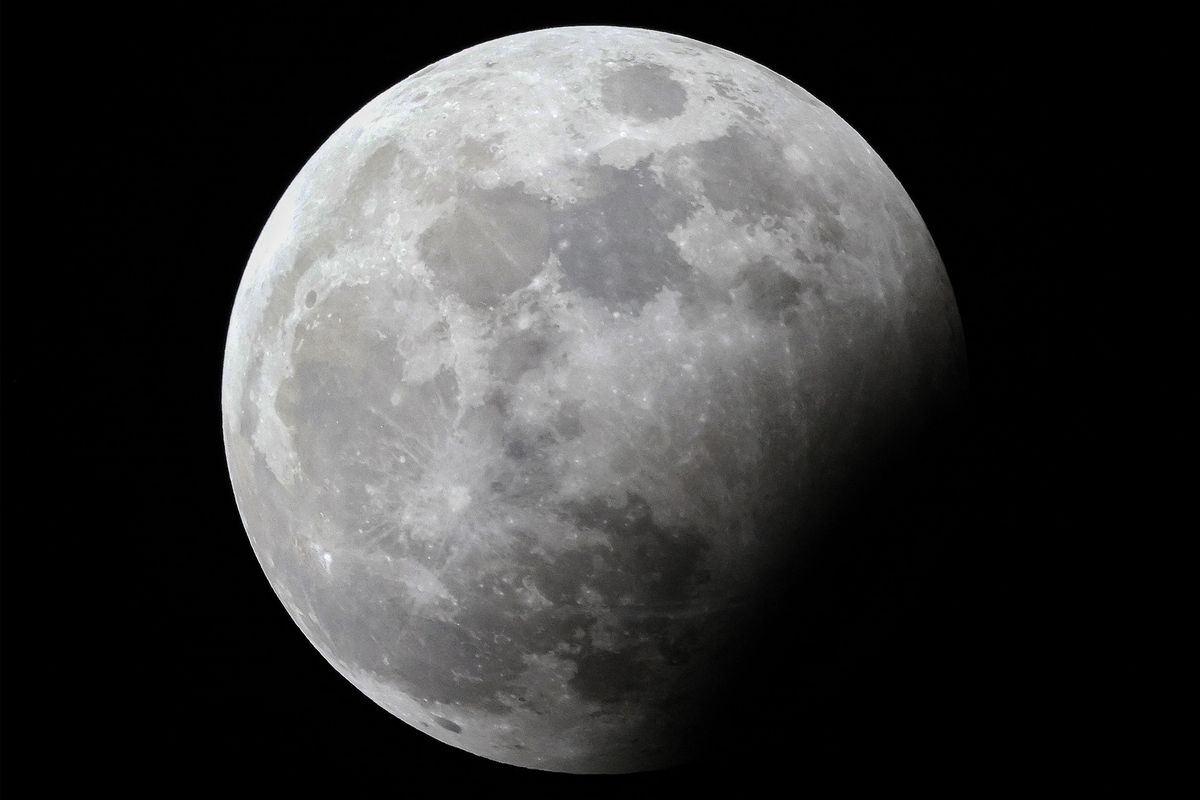 Last weekend a partial lunar eclipse illuminated the sky. People in Europe, Africa, Asia, and Western Australia spotted this scene best.
 A lunar eclipse is when the Earth passes between the Sun and the Moon. It only happens on the full moon. Two factors determine the type of eclipse. First the tilt of the moon’s orbit. Second, the type of Earth’s shade; umbra and penumbra. When the moon orbits in the umbra it doesn't black it out. The atmosphere filters out the blue light. The blue light scatters before it reaches our eyes, so during the total eclipse the moon takes on a red hue.
Partial eclipse happens twice a year, while total eclipse does in years.
Vocabularies; best, tilt, orbit, hue, filter out
REFERENCE
Comments
Post a Comment