At any given time, approximately 50,000 vessels are traversing. When we examine the carbon dioxide emission pie, the maritime industry accounts for only 2.9%. It’s not insignificant and is even equivalent to the G7 economies like Japan or Germany. It is expected to double by 2050.
The shipping industry’s global regulators pledged to cut down on emissions and achieve carbon neutrality by 2050. It means the transition from burning fossil fuel to using wind, electronics, and others. They will see about efficiency savings, whether wind propulsion or ship’s hole designs. There will also be necessary changes in ports to accept these new vessels. But all of them are surmountable, the President & CEO of Zero Emission Maritime Buyers Alliance said.
For years, the shipping industry has benefited from inexpensive ability and residual. But Ships need to have bells and whistles. The problem is there aren’t many of them on the market. Here are some possible replacements. First, Ammonium, which is scalable. It means it could come down in cost. Second, Methanol, which is already deployed in small amounts. Lastly, electrification. In no longer time, we might see fuel cells at scale.
*Vocabularies; bells and whistles, at any given time, traverse, maritime, efficiency savings, propulsion, in olden days, see about sth, surmount, surmountable, benefit, residual, on the market, at scale, scalable, electrify, electrification, fuel cell
REFERENCE
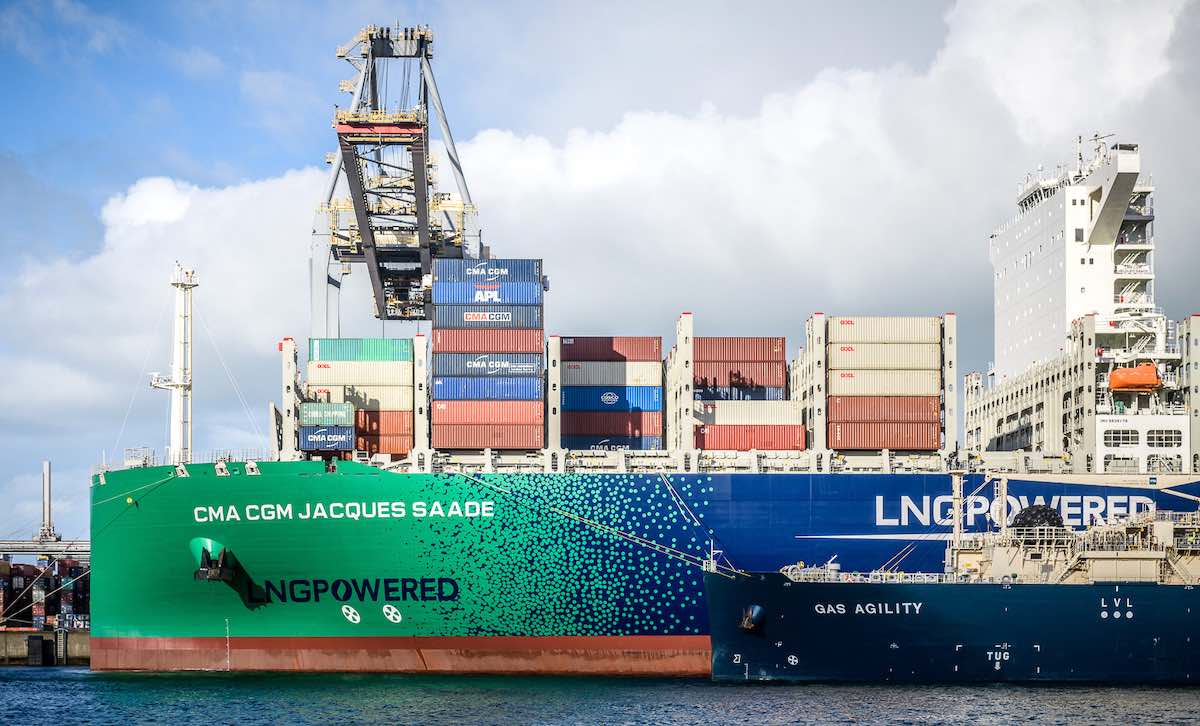
The shipping industry’s global regulators pledged to cut down on emissions and achieve carbon neutrality by 2050. It means the transition from burning fossil fuel to using wind, electronics, and others. They will see about efficiency savings, whether wind propulsion or ship’s hole designs. There will also be necessary changes in ports to accept these new vessels. But all of them are surmountable, the President & CEO of Zero Emission Maritime Buyers Alliance said.
For years, the shipping industry has benefited from inexpensive ability and residual. But Ships need to have bells and whistles. The problem is there aren’t many of them on the market. Here are some possible replacements. First, Ammonium, which is scalable. It means it could come down in cost. Second, Methanol, which is already deployed in small amounts. Lastly, electrification. In no longer time, we might see fuel cells at scale.
*Vocabularies; bells and whistles, at any given time, traverse, maritime, efficiency savings, propulsion, in olden days, see about sth, surmount, surmountable, benefit, residual, on the market, at scale, scalable, electrify, electrification, fuel cell
REFERENCE
Comments
Post a Comment